Garment Size Chart Kaise Banayein
Agar aap clothing brand shuru kar rahe hain ya kisi manufacturer ke saath garments banwa rahe hain, to garment size chart kaise banayein ye samajhna bahut zaruri hai. Ek accurate size chart customer ko perfect fitting deta hai, returns ko kam karta hai aur brand ki credibility badhata hai. Chahe aap T-shirts, hoodies, shirts ya trousers manufacture karwa rahe hon, har product ke liye proper size chart banana production ka ek important step hai.
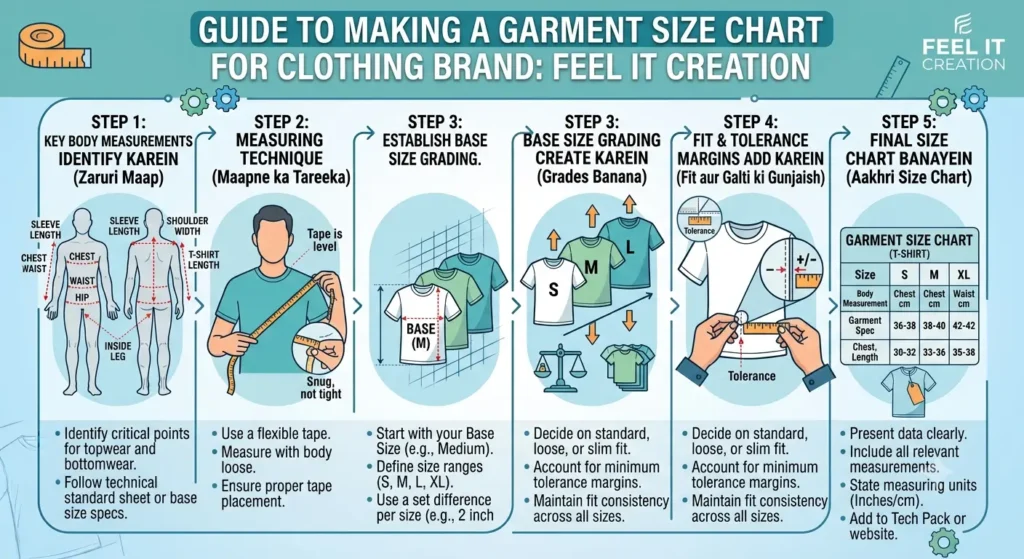
Is guide me hum step-by-step samjhayenge ki garment size chart kaise banaya jata hai aur kaun-kaun se measurements zaruri hote hain.
Why Is a Garment Size Chart Important?
Ek proper size chart:
- Improves garment fitting
- Reduces customer returns
- Maintains size consistency
- Helps manufacturers produce accurately
- Improves customer satisfaction
Without a proper size chart, even premium-quality garments may not fit customers correctly.
Step 1: Decide Your Target Market
Sabse pehle ye decide karein ki garments kis market ke liye ban rahe hain.
Examples:
- India
- USA
- UK
- Europe
- Australia
Har country ka sizing standard alag hota hai.
Step 2: Choose Size Range
Apne products ke according size range decide karein.
Common sizes:
- XS
- S
- M
- L
- XL
- XXL
- 3XL
Kids garments aur plus-size garments ke liye alag sizing hoti hai.
Step 3: Take Body Measurements
Body measurements accurate hone chahiye.
Common measurements include:
- Chest
- Waist
- Hip
- Shoulder
- Sleeve Length
- Neck
- Body Length
- Inseam
- Outseam
Professional measuring tape ka use karein.
Step 4: Convert Body Measurements into Garment Measurements
Body measurement aur garment measurement same nahi hote.
Garment me wearing ease add ki jati hai.
Example:
- Chest (Body): 40″
- Garment Chest: 44″
Extra ease customer ko comfort provide karti hai.
Step 6: Apply Size Grading
Grading ka matlab hota hai ek size se next size me measurement increase karna.
Example:
| Size | Chest | Length |
|---|---|---|
| S | 38″ | 27″ |
| M | 40″ | 28″ |
| L | 42″ | 29″ |
| XL | 44″ | 30″ |
Consistent grading se har size balanced fit deta hai.
Step 5: Create Measurement Points (POM)
POM (Points of Measure) garment production ka standard system hai.
Example for T-shirt:
- Chest Width
- Shoulder Width
- Body Length
- Sleeve Length
- Sleeve Opening
- Neck Width
- Neck Drop
- Bottom Width
Ye measurements production aur quality inspection dono me use hote hain.
Step 7: Prepare the Final Size Chart
A professional size chart generally includes:
| Size | Chest | Shoulder | Length | Sleeve |
|---|---|---|---|---|
| S | 38″ | 16.5″ | 27″ | 8″ |
| M | 40″ | 17.5″ | 28″ | 8.5″ |
| L | 42″ | 18.5″ | 29″ | 9″ |
| XL | 44″ | 19.5″ | 30″ | 9.5″ |
| XXL | 46″ | 20.5″ | 31″ | 10″ |
Step 8: Make a Sample
Bulk production se pehle sample garment banwayein.
Check:
- Fit
- Measurements
- Comfort
- Fabric behavior
- Shrinkage
Necessary corrections sample stage par hi karein.
Step 9: Quality Inspection
Production ke dauran measurements ko repeatedly check karein.
Quality team generally checks:
- Chest
- Length
- Shoulder
- Sleeve
- Neck
- Bottom Opening
Proper quality control size consistency maintain karta hai.
Common Mistakes While Creating Size Charts
Avoid these mistakes:
- Copying competitor size charts
- Ignoring fabric shrinkage
- Not considering garment ease
- Wrong grading increments
- Skipping sample approval
- Using inconsistent measurements
Tips for Accurate Garment Size Charts
- Use professional measurement methods.
- Maintain grading consistency.
- Test every new style.
- Measure garments after washing if applicable.
- Keep detailed technical specification sheets.
- Update size charts when designs change.
Why Choose Feel It Creation?
At Feel It Creation, we help clothing brands develop accurate size charts before production.
Our services include:
- Custom clothing manufacturing
- Pattern development
- Size grading
- Sample development
- Private label manufacturing
- Low MOQ production
- Quality inspection
- Export-quality garments
Frequently Asked Questions
What is a garment size chart?
A garment size chart is a measurement guide that specifies the dimensions of each garment size, ensuring consistency in production and helping customers choose the correct fit.
What is grading in garment manufacturing?
Grading is the process of increasing or decreasing garment measurements proportionally to create different sizes from a base pattern.
Why is a size chart important?
A proper size chart reduces fitting issues, improves customer satisfaction, and minimizes product returns.
Can one size chart be used for all garments?
No. Different garments such as T-shirts, shirts, hoodies, dresses, and trousers require separate size charts because their fit and measurements vary.
Conclusion
Knowing garment size chart kaise banayein is essential for producing well-fitted, high-quality garments. By using accurate body measurements, proper grading, and sample testing, you can create size charts that improve customer satisfaction and reduce costly returns. Working with an experienced clothing manufacturer also ensures that every garment is produced according to your approved specifications.