
T-Shirt Manufacturing Process Explained
T-shirts are one of the most popular garments in the fashion industry. Whether you’re starting a clothing brand or looking for a reliable manufacturer, understanding the T-shirt manufacturing process helps you make better production decisions. From selecting the right fabric to final packaging, every step plays an important role in delivering high-quality garments.
In this guide, we’ll explain the complete T-shirt manufacturing process in a simple, step-by-step manner.
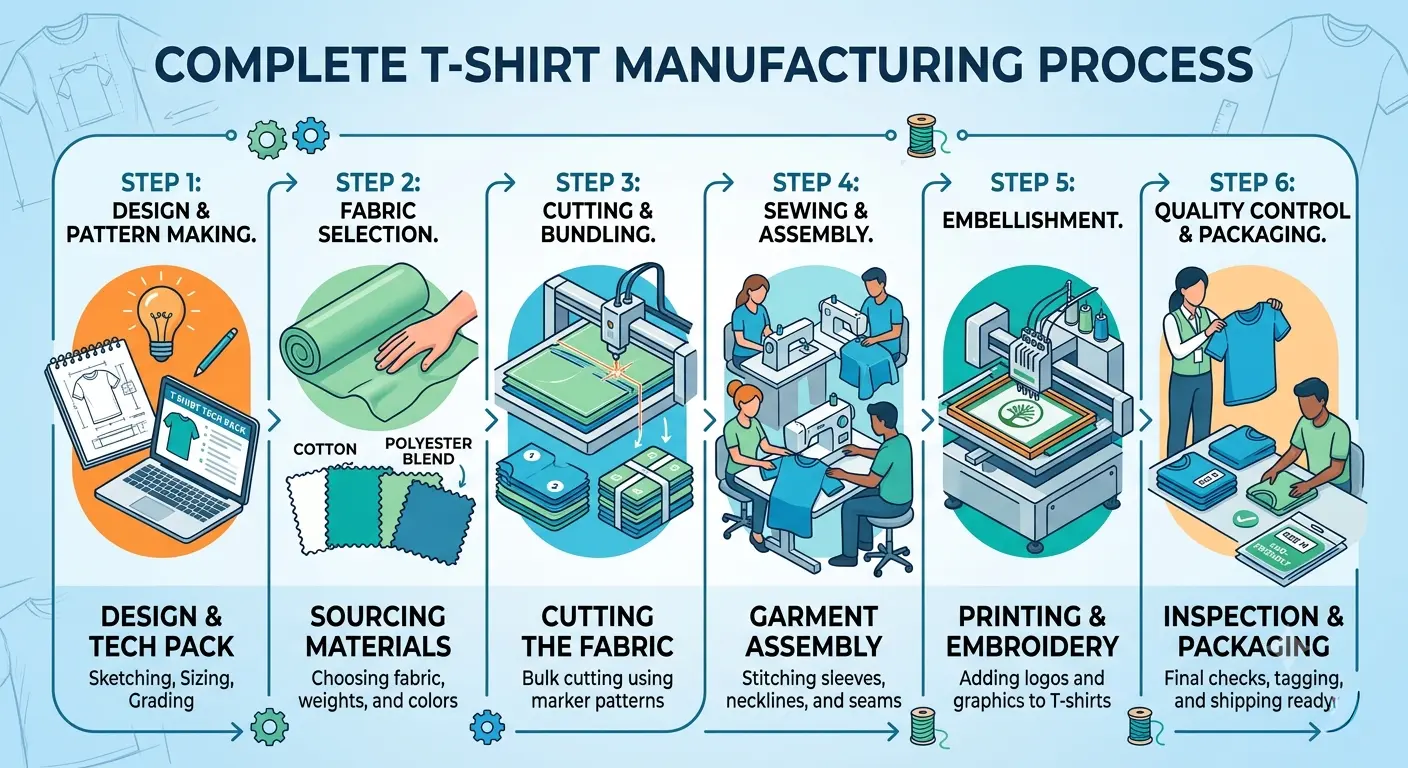
1. Fabric Selection
The first step is choosing the right fabric based on your product requirements.
Popular T-shirt fabrics include:
- 100% Cotton
- Cotton Polyester Blend
- Organic Cotton
- Combed Cotton
- Carded Cotton
- Bamboo Fabric
Factors to consider:
- GSM (160-240 GSM)
- Fabric softness
- Shrinkage
- Breathability
- Durability
2. Pattern Making
Once the fabric is finalized, professional pattern makers create patterns according to the required size chart.
Pattern making ensures:
- Perfect fitting
- Size consistency
- Better garment shape
- Reduced fabric wastage
3. Fabric Inspection
Before cutting, every fabric roll is inspected for defects such as:
- Shade variation
- Holes
- Stains
- Knitting faults
Quality inspection helps reduce production issues later.
4. Fabric Spreading
The inspected fabric is spread in multiple layers on the cutting table.
Proper spreading ensures:
- Accurate cutting
- Consistent sizing
- Less fabric wastage
5. Fabric Cutting
Using automatic or manual cutting machines, the fabric is cut according to approved patterns.
Different parts include:
- Front panel
- Back panel
- Sleeves
- Neck rib
Precision cutting improves production efficiency and garment quality.
6. Printing or Embroidery
If the T-shirt requires branding or artwork, printing or embroidery is completed before stitching.
Popular printing methods:
- Screen Printing
- DTF Printing
- DTG Printing
- Puff Printing
- Heat Transfer Printing
Brand logos can also be embroidered.
This is the most important stage.
Different operations include:
- Shoulder joining
- Sleeve attachment
- Side seam stitching
- Neck rib attachment
- Bottom hemming
- Sleeve hemming
Industrial machines ensure durable stitching and clean finishing.
8. Quality Inspection
Every T-shirt is inspected for:
- Stitch quality
- Measurement accuracy
- Thread trimming
- Fabric defects
- Printing quality
- Overall appearance
Only approved garments move to the finishing department.
9. Finishing
The finishing process includes:
- Thread trimming
- Steam ironing
- Spot cleaning
- Folding
- Size sticker application
This step prepares the garment for packing.
10. Packing
The final step includes:
- Poly bag packing
- Barcode application
- Carton packing
- Shipping labels
- Export documentation (if required)
Proper packaging protects garments during transportation.
Why Quality Control Matters
Quality control is performed throughout production to ensure:
- Consistent sizing
- Premium stitching
- Better customer satisfaction
- Lower rejection rates
- Higher brand reputation
Reliable manufacturers inspect garments at every stage instead of waiting until production is complete.
Why Choose Feel It Creation?
At Feel It Creation, we provide complete T-shirt manufacturing solutions for startups, fashion brands, wholesalers, and private label businesses.
We offer:
- Low MOQ production
- Custom T-shirt manufacturing
- Private label services
- Fabric sourcing
- Custom printing & embroidery
- Strict quality control
- Export-quality garments
- On-time delivery
Frequently Asked Questions
What fabric is best for T-shirt manufacturing?
Combed cotton, organic cotton, and cotton-polyester blends are among the most popular choices because they offer comfort, durability, and excellent print quality.
What is the ideal GSM for a T-shirt?
Most brands use 160 GSM to 220 GSM depending on the product type and target market.
How long does T-shirt manufacturing take?
Production time usually ranges from 15 to 45 days depending on order quantity, fabric availability, printing, and customization requirements.
Can I manufacture custom T-shirts with my own brand?
Yes. Private label manufacturing allows you to customize labels, designs, fabric, packaging, and branding without owning a factory.
Conclusion
The T-shirt manufacturing process involves several carefully managed stages, including fabric selection, pattern making, cutting, stitching, quality inspection, finishing, and packaging. Working with an experienced clothing manufacturer ensures consistent quality, efficient production, and timely delivery.
If you’re planning to launch your own clothing brand or need a trusted manufacturing partner, choosing a reliable factory can make all the difference.
Call to Action:
Looking for a trusted T-shirt manufacturer in India? Contact Feel It Creation today to discuss your custom manufacturing requirements and request a free quote.