
How to Price Custom Clothing Products
Understanding how to price custom clothing products is essential for every fashion brand, startup, and apparel business. The right pricing strategy helps you cover production costs, stay competitive, and earn healthy profit margins. Whether you’re launching a private label clothing brand or expanding your existing collection, knowing how to price custom clothing products correctly can make a significant difference to your long-term success.
In this guide, we’ll explain the complete pricing process, including fabric costs, manufacturing expenses, labor, packaging, shipping, overheads, and profit margins. By the end, you’ll have a clear framework for setting profitable and competitive prices for your custom clothing products.
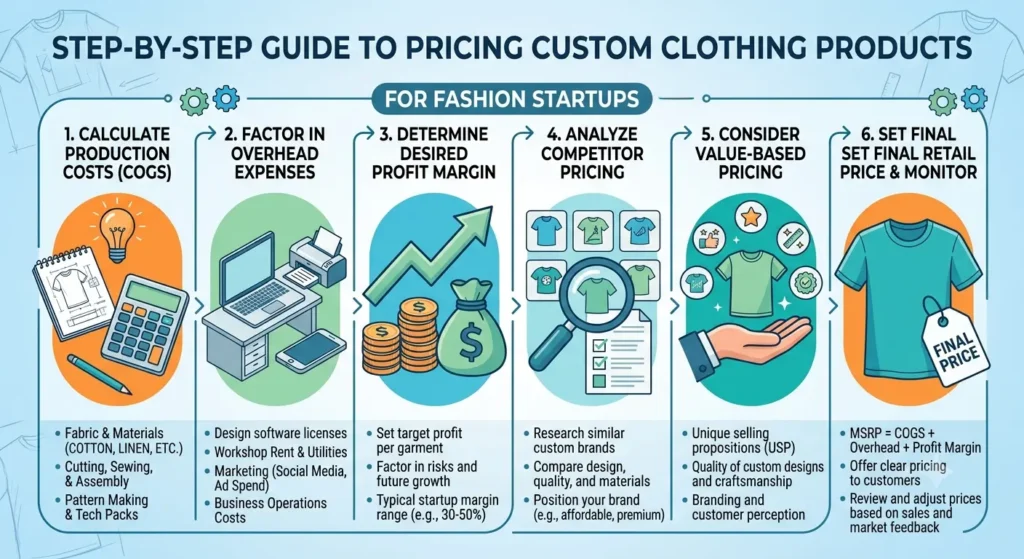
Why Pricing Matters
Proper pricing helps you:
- Increase profit margins
- Cover all production costs
- Stay competitive
- Build customer trust
- Grow your clothing brand sustainably
Many new brands make the mistake of pricing products based only on manufacturing costs. However, several other expenses should also be included.
1. Calculate Fabric Cost
Fabric is usually the largest cost in garment manufacturing.
Consider:
- Fabric price per meter
- Fabric consumption per garment
- Fabric wastage
- Dyeing or washing charges
Example
- Fabric Price: $4 per meter
- Fabric Consumption: 1.6 meters
Fabric Cost = $6.40
2. Add Trims and Accessories
Include the cost of every component used in the garment.
Examples:
- Neck labels
- Care labels
- Hang tags
- Buttons
- Zippers
- Elastic
- Drawcords
- Poly bags
- Cartons
Even small accessories can significantly impact your final cost.
3. Calculate Manufacturing Cost
Manufacturing costs include:
- Cutting
- Stitching
- Printing
- Embroidery
- Washing
- Finishing
- Packing
Factories usually calculate these costs per piece.
4. Include Labor Costs
Labor expenses cover workers involved in:
- Cutting
- Sewing
- Quality inspection
- Finishing
- Packing
Skilled labor often costs more but delivers better quality and fewer production errors.
5. Add Overhead Expenses
Don’t forget indirect business costs, such as:
- Factory rent
- Electricity
- Machinery maintenance
- Office salaries
- Internet
- Software
- Marketing
- Administrative expenses
Ignoring overhead costs can reduce your actual profit.
6. Include Shipping and Packaging
Shipping expenses may include:
- Domestic transportation
- International freight
- Customs documentation
- Export packaging
- Courier charges
Packaging costs include:
- Poly bags
- Cartons
- Brand stickers
- Tissue paper
- Custom boxes
7. Decide Your Profit Margin
After calculating total production cost, add your desired profit margin.
Typical profit margins:
| Business Type | Recommended Margin |
|---|---|
| Manufacturer | 20% to 40% |
| Wholesale Brand | 40% to 70% |
| Retail Brand | 100% to 300% |
| Luxury Fashion Brand | 300%+ |
Choose a pricing strategy that aligns with your target market and brand positioning.
8. Research Competitor Pricing
Compare your products with competitors based on:
- Fabric quality
- GSM
- Stitch quality
- Branding
- Packaging
- Customer service
Don’t compete only on price. Focus on delivering better value.
9. Consider MOQ
Minimum Order Quantity (MOQ) affects production cost.
Higher MOQs usually result in:
- Lower manufacturing cost per piece
- Better fabric pricing
- Reduced wastage
- Improved profit margins
Lower MOQs provide flexibility but generally increase the cost per unit.
10. Review Your Pricing Regularly
Production costs can change due to:
- Fabric price increases
- Labor cost changes
- Shipping charges
- Currency fluctuations
- Market demand
Review your pricing periodically to maintain healthy profit margins.
Sample Pricing Calculation
| Cost Component | Cost |
|---|---|
| Fabric | $6.40 |
| Trims & Accessories | $1.20 |
| Manufacturing | $4.50 |
| Packaging | $0.80 |
| Shipping | $1.50 |
| Overhead | $1.60 |
| Total Cost | $16.00 |
If you apply a 50% profit margin, your selling price becomes approximately $24.00 per garment.
Common Pricing Mistakes
Avoid these common errors:
- Ignoring overhead costs
- Underpricing to attract customers
- Forgetting packaging expenses
- Not calculating shipping correctly
- Copying competitors’ prices without analyzing your own costs
- Using the same pricing for every product
Tips to Maximize Profit
- Source high-quality fabrics at competitive prices.
- Optimize fabric consumption to reduce waste.
- Increase production efficiency.
- Order larger quantities when possible.
- Build long-term relationships with reliable manufacturers.
- Regularly review supplier and shipping costs.
Why Choose Feel It Creation?
At Feel It Creation, we help fashion brands produce premium-quality garments at competitive prices.
Our services include:
- Custom clothing manufacturing
- Private label manufacturing
- Low MOQ production
- Fabric sourcing
- Custom printing and embroidery
- Quality inspection
- Export-quality packaging
- On-time delivery
Frequently Asked Questions
How do I calculate the price of custom clothing?
Add fabric, trims, manufacturing, labor, overhead, packaging, shipping, and your desired profit margin to determine the final selling price.
What is a good profit margin for clothing?
Most clothing brands aim for a profit margin between 40% and 70% for wholesale, while retail brands often target 100% or more, depending on their positioning.
Why is MOQ important in pricing?
Higher MOQs generally reduce the production cost per garment, making your pricing more competitive and profitable.
Conclusion
Knowing how to price custom clothing products is essential for building a profitable fashion business. By accurately calculating all production costs, adding a realistic profit margin, and monitoring market trends, you can set prices that attract customers while supporting long-term growth.
If you’re looking for a reliable manufacturing partner to produce high-quality custom apparel at competitive prices, Feel It Creation can help bring your clothing brand to life.